
News & Blog
.jpg)


Conflict to Coexistence: Community-Led Elephant Conservation in Dhenkanal, Odisha
12 August, 2026
On World Elephant Day, we reaffirm our commitment to protecting the magnificent Asian elephant while supporting the communities who share their landscapes. Across Odisha, elephants and people have lived alongside each other for generations. However, increasing pressure on natural habitats, changing land-use patterns and the movement of elephants through human-dominated areas are creating new challenges for both wildlife and communities.
In Dhenkanal district of Odisha, one of the areas experiencing recurring human–elephant conflict, we are working with local communities and stakeholders to promote safer, more sustainable and community-led approaches to human–elephant coexistence.
Working Together for Coexistence
In association with Humane World for Animals and in close coordination with the local Forest Department, APOWA is supporting a collaborative approach that brings communities, field-level forest staff and community-based organisations (CBOs) together.
Rather than viewing human–elephant conflict only as a wildlife conservation issue, our approach recognises that coexistence requires the participation of everyone. Through community engagement and field-level discussions, local people are encouraged to share their experiences, identify conflict hotspots, understand elephant behaviour and explore practical solutions that can reduce risks to both people and elephants.
Putting Communities at the Centre
Communities living close to elephant habitats are often the first to experience the impacts of human–elephant conflict. They also possess valuable knowledge about local landscapes, elephant movement patterns and seasonal changes.
From Fear to Understanding
Human–elephant conflict can create fear, economic losses and frustration among communities, while elephants may face injury, habitat fragmentation and increasing pressure as they move through human-dominated landscapes. Addressing these challenges requires more than short-term responses. It requires trust, communication, awareness and locally relevant solutions. By creating opportunities for communities and frontline forest staff to work together, APOWA aims to strengthen understanding on both sides and encourage a shift from reactive conflict management towards proactive coexistence.
Building a Future for People and Elephants
Long-term elephant conservation will depend on our ability to protect elephants while ensuring that communities living alongside them have the knowledge, support and capacity to coexist safely. The journey from conflict to coexistence, from fear to understanding, and from short-term responses to community-led solutions will take time and sustained commitment. But by working together, we can build landscapes where both people and elephants have a safer and more secure future.

Flood Relief to Working Equines: Saving the Animals That Sustain Families
30 July, 2026
The recent floods in Odisha have left hundreds of animals including working horses, donkeys, and mules stranded — many of them employed at local brick kilns, already among the most vulnerable and overworked animals in our communities. These equines carry heavy loads daily, often with little rest or veterinary care even in normal times. As floodwaters submerged kiln sites and surrounding villages, some of them lost their life, many of these equines were left stranded without vet care, shelter, fodder and water, and at growing risk of hoof rot, skin infections, colic, and exhaustion from wading through mud and debris. Our mobile response team has been on the ground providing: 🩺 Emergency veterinary care 🌾 Dry fodder 🏠 Temporary shelter 💉 Preventive treatment against water-borne infections. These equines don't get evacuation alerts or relief centres of their own — but they carry the weight of entire families' incomes on their backs. Helping them recover is helping the most vulnerable workers in rebuild their lives too.


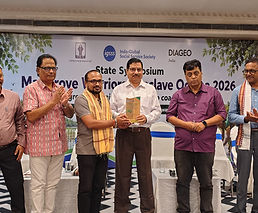

APOWA Honoured with "Mangrove Warrior Award" for Dedicated Service to Mangrove Replenishment in Coastal Odisha
28, July, 2026
Action for Protection of Wild Animals (APOWA) has been honoured with the "Mangrove Warrior Award" in recognition of its dedicated contribution to mangrove replenishment and coastal ecosystem restoration in Odisha.
The award was presented during the Mangrove Warriors Conclave 2026, held on 28 July 2026 at Hotel Presidency, Bhubaneswar, and jointly organized by the Indo Global Social Service Society (IGSSS) and the Indian Institute of Education and Care (IIEC), with support from Diageo India as part of its ongoing commitment to environmental sustainability and climate resilience.
For several years, APOWA has been working with coastal communities to restore degraded mangrove ecosystems along Odisha's coastline. Through community participation, awareness campaigns, plantation drives, and conservation initiatives, the organisation has helped strengthen natural coastal barriers that protect villages from cyclones, storm surges, erosion, and the growing impacts of climate change.
Receiving this prestigious recognition is a testament to the unwavering commitment of APOWA's staff, volunteers, community members, government partners, and supporters who have worked tirelessly to conserve Odisha's fragile coastal ecosystems.
Speaking on the occasion, the APOWA team expressed heartfelt gratitude to IGSSS, IIEC, and Diageo India for recognizing grassroots conservation efforts and for promoting collaborative action to protect mangrove ecosystems. "Mangroves are more than trees—they are lifelines for coastal communities, biodiversity, and climate resilience. This recognition inspires us to continue our mission of protecting and restoring these invaluable ecosystems for future generations."
APOWA remains committed to expanding mangrove restoration, strengthening community stewardship, promoting biodiversity conservation, and building climate-resilient coastal landscapes across Odisha. We dedicate this award to every community member, volunteer, and partner who has stood with us in protecting nature and creating a greener, safer future.

International Mangrove Action Day
Celebrating the Green Shield of Odisha's Coast
21, July, 2026
Every year, International Mangrove Action Day reminds us of the invaluable role mangrove forests play in protecting our planet and the millions of people who depend on healthy coastal ecosystems. These remarkable forests are far more than clusters of trees—they are natural barriers against cyclones, nurseries for marine life, carbon sinks that help combat climate change, and lifelines for coastal communities.
At APOWA (Action for Protection of Wild Animals), this day is an opportunity to celebrate the remarkable journey of Mission Mangroves—a flagship initiative dedicated to restoring and protecting Odisha's precious mangrove ecosystems.
A Journey of Conservation Since 1999
For over two decades, APOWA has been at the forefront of coastal conservation in Odisha. Since 1999, the organization has worked tirelessly to restore degraded mangrove forests while strengthening the resilience of vulnerable coastal communities against natural disasters and the growing impacts of climate change.
Through community-led restoration programmes across the coastal districts of Kendrapara and Jagatsinghpur, Mission Mangroves has transformed degraded landscapes into thriving ecosystems. These restored mangrove forests support biodiversity, improve fisheries, enhance food security, and create sustainable livelihood opportunities for local communities.
Nature's Strongest Coastal Defender
Odisha's coastline is highly vulnerable to cyclones and storm surges. Mangroves serve as a living shield between rivers, the sea, and human settlements, reducing the destructive force of high winds and tidal waves before they reach villages.
Time and again, these green barriers have demonstrated their ability to protect lives, homes, farmland, and infrastructure during severe cyclonic events. Their extensive root systems stabilize shorelines, prevent erosion, reduce flooding, and improve water quality—making them one of nature's most effective climate adaptation solutions.
Communities at the Heart of Conservation
The success of Mission Mangroves is rooted in community participation. APOWA has brought together local villagers, community leaders, scientists, environmentalists, students, government agencies, and partner organizations to restore, protect, and sustainably manage mangrove ecosystems.
This collaborative approach has strengthened environmental awareness, encouraged local stewardship, and empowered communities to become long-term custodians of their natural resources.
Building a Climate-Resilient Future
Healthy mangrove ecosystems contribute significantly to climate resilience by storing large amounts of carbon, supporting rich biodiversity, protecting coastal habitats, and sustaining livelihoods. Investing in mangrove restoration is an investment in both people and nature.
Mission Mangroves stands as a powerful example of how science, community action, and environmental stewardship can work together to restore ecosystems while safeguarding lives and livelihoods for future generations.
Join the Movement
On this International Mangrove Action Day, let us renew our commitment to protecting and restoring these extraordinary ecosystems. Together, we can ensure that Odisha's mangroves continue to stand as nature's frontline defenders against climate change, protecting biodiversity, strengthening coastal resilience, and securing a greener future for generations to come.

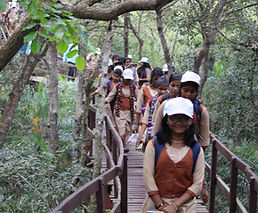

Exploring the Wild: A Field Trip to Bhitarkanika Mangrove Park
21, July, 2026
A group of school students embarked on an educational field trip to Bhitarkanika National Park in Odisha. This unique ecosystem provided the perfect backdrop for hands-on learning about biodiversity, conservation, and geography.
The Journey into India's Amazon
Known as India's Amazon, Bhitarkanika has the second-largest mangrove ecosystem in the country. As students swapped their desks for a boat ride along the river, textbook chapters about ecosystems immediately became real. While traveling through winding water channels surrounded by dense mangrove foliage, the children discovered how these unique trees are able to survive in saltwater through aerial roots (pneumatophores). The sight of roots growing out of mud rather than deep in soil was eye-opening for many students.
Close Encounters with Wildlife
The highlight of the field trip was observing Bhitarkanika’s famous wildlife in its natural habitat. The park is home to the largest population of endangered saltwater crocodiles in India.
• Crocodile Watching: Students spotted giant crocodiles basking on the mudflats. They learned about the successful conservation programs that saved these reptiles from the brink of extinction.
• Bird Paradise: The children used binoculars to observe thousands of migratory and resident birds. They identified different species of herons, egrets, and kingfishers.
• Spotted Deer: Walking along the nature trails, students caught glimpses of spotted deer grazing peacefully, understanding the delicate balance of the food chain.
Lessons in Environmental Conservation
In addition to the thrill of seeing wild animals, the field experience highlighted the importance of mangroves in saving lives. Students were told how mangroves act as a natural shield against cyclones and tsunamis due to their dense root systems. These forests protect Odisha's coastal villages from fierce waves. As a result of learning about deforestation and climate change, the children were inspired to think of ways they can protect the environment.
Why Field Exposure Matters for Students
1. Bridges Theory and Practice: Concepts like biodiversity, adaptation, and estuarine ecosystems can be abstract. Seeing them in person makes the knowledge permanent.
2. Develops Observation Skills: Navigating a forest requires students to use all their senses—listening to bird calls, spotting camouflaged reptiles, and touching mangrove leaves.
3. Fosters Teamwork: Traveling together encourages students to collaborate, share resources, and look out for one another in an outdoor setting.
4. Instills Empathy for Nature: Experiencing the beauty of the wild firsthand creates an emotional connection to the planet, turning students into future conservationists.
Conclusion
Bhitarkanika Mangrove Park was more than a day off school for students. It was an immersion educational journey that sparked environmental awareness and curiosity. By stepping into nature's classroom, these children developed a lifelong respect for nature, not just memorizing facts.
Combining science and community empowerment to conserve sea turtles

23, May, 2026
Our sea turtle conservation initiative has been successful over the years because of a combination of science and community empowerment. The most critical takeaways focus on holistic approach through active community involvement, habitat protection and continuous adaptation to modern environmental challenges. This approach has led to increased nesting success, reduced threats, and improved community awareness about sea turtle conservation. By integrating local knowledge with scientific approach the initiative ensures sustainable practices that benefit both the ecosystem and the local communities. Our approach emphasizes education, local participation in monitoring and protection efforts, reducing plastic wastes and sustainable practices that align with ecological needs. This holistic strategy not only strengthens the resilience of sea turtle populations but also fosters a sense of stewardship among local communities. By addressing root causes like habitat loss and pollution, the initiative creates long-term benefits for biodiversity while empowering people to actively contribute to environmental preservation and sustainable development.
Acting locally for global impact


22, May, 2026
Story of a coastal village (Jagannathpur, Kendrapara, Odisha) restored degraded wetland to make a climate-resilient and ecologically functional habitat for biodiversity. The villagers worked together included reforestation, sustainable practices, enhanced livelihood and community-led conservation initiatives. This not only improved biodiversity but also provided a buffer against flooding and storm surges. Their efforts serve as a model for community-led conservation and climate adaptation in vulnerable coastal areas.
Participatory mangrove restoration has been promoted to achieve the success of creating a mangrove forest. For a mangrove forest to be sustainable, it needs the full participation of the local community members that rely on it for food, fodder, livelihood, and cyclone protection. Since the beginning of this project, we have engaged the communities in Jagannathpur village and taught them about climate change threats, the importance of wetlands, mangrove plantation, protecting agriculture fields, protecting embankments, providing employment for locals who lost their jobs during the COVID-19 epidemic, and sharing resources with the artisan community that collects nalia grass. The community members of Jagannathpur village realized the importance of mangroves and collaborated to plant them on the bank of the Patashala river near their village. Following coordination with the Tahsildar and the Research Institute (RI), the village committee began the process of plantation after completing all the necessary processes regarding the area facilitated by the project. The committee selected both the nursery care taker and watch & guard. The local people (both voluntarily & paid basis) were participated in plantation process including nursery works, land preparation, fencing etc. A sense of unity and cooperation has been filled into the local people of Jagannathpur involved in mangrove plantation and management.
Short Term Results and Impact
Plantation activities in 20.74 Ha. area generated person days ( nursery raising , fencing, bed preparation, poly pot fill up soil, poly pot setting, seed dibbling, watch & ward, area fencing, channel renovation, hypocotyls collection, plantation etc. ). Provided green jobs or employment opportunities for locals, helping them sustain their livelihoods during the challenging COVID period.
Long Term Results and Impact
Enhanced protection against cyclones, floods, control river erosion
Despite faced 2 cyclones since these mangroves were planted, still they stand strong to protecting the lives and properties of100+ families. No cyclone-related fatalities and property damage reported after intervention.
Improved biodiversity
The increase in biodiversity has attracted more birds like kingfisher, baya weaver ,Greater Coucal etc., and animal specie like fishing cat, crocodile, water monitor lizard, otter , wild boar, reptiles etc. also reported in this site after intervention.
Improved livelihoods for local nalia grass artsian 100+ local nalia grass artisans families collected raw materials from this site in a short period of time after proper management of the site. Before, only a small number of people collected nalia grass after spending many hours of time collecting.
Sustain livelihoods for fishermen communities
The restored area has become a breeding ground for several types of fish, craband 40+ fishermen families good catch of fish and crab in a regular basis after intervention.
Difficult Road to Success
It wasn't an easy start, but gradually our efforts gathered momentum. "Initially, we found it tough to bring all the people of the village together for restoration of mangroves. But with consistent efforts, we were able to bring everyone under one platform. We overcame these challenges through Trust, Transparency, Teamwork in local community members. This collective effort demonstrated how perseverance and unity can lead to significant environmental and social benefits, inspiring other communities to undertake similar initiatives. This success demonstrates how small-scale, local actions can contribute significantly to global environmental goals.
Empowering Biodiversity Management Committees
21, May, 2026

Bhitarkanika is internationally recognized for its diversity listed as a Ramsar site. However, despite Bhitarkanika's ecological importance, it faces a number of challenges. To document biodiversity, traditional knowledge and practices, we are preparing People's Biodiversity Registers (PBRs) in 51-gram panchayats in collaboration with the Odisha Biodiversity Board. These PBRs aim to record local biodiversity, traditional ecological knowledge, and traditional practices of the communities. This initiative helps in conservation planning, ensure better management of natural resources, and support the integration of traditional wisdom with scientific approaches to address the ecological challenges faced by Bhitarkanika. In addition, facilitate the formation of biodiversity management committees in more than 500 panchayats in Kendrapara and Jagatsinghpur districts. These committees play a crucial role in documenting and conserving local biodiversity, empowering communities to participate in decision-making, and ensuring sustainable resource use. This collaborative effort also supports long-term ecological resilience by bridging gaps between local practices and scientific conservation strategies. This approach not only strengthens community involvement in biodiversity conservation but also fosters a deeper understanding of the interconnectedness between human activities and ecosystem health. By integrating local knowledge with modern science, the project promotes sustainable development and enhances the adaptive capacity of communities to environmental changes. This holistic approach not only preserves biodiversity but also enhances community livelihoods by promoting eco-friendly practices. It creates a cycle where conservation efforts support local economies, ensuring long-term sustainability and resilience. Such initiatives exemplify how collaborative conservation can harmonize human needs with environmental protection.
Technology for mangroves

01, April, 2026
We are using drone technology and monitor the growth, health and survival of mangrove plantations by taking high-resolution, georeferenced aerial images. Drones allow for the efficient collection of data over large areas, reducing the time and manual surveys. They provide precise and up-to-date information, enabling quick detection of any issues affecting the mangroves. Additionally, drones minimize human disturbance in sensitive ecosystems, ensuring more accurate and reliable data. These images allow us to assess vegetation density, detect stress indicators, and track changes over time. This method improves efficiency compared to manual monitoring and provides accurate data for conservation efforts. Additionally, it supports decision-making by identifying areas needing intervention like re-planting, water management etc to ensure the long-term sustainability. This approach not only enhances the effectiveness of mangrove conservation but also supports long-term ecological balance by identifying threats like erosion or pollution early. In summary, drones are a powerful tool for efficient, accurate mangrove conservation, supporting sustainability and early threat mitigation.


Ghost Nets deadliest threats to sea turtles
24, March, 2026
The deadliest threat to sea turtles is ghost nets, which are abandoned, lost, or discarded fishing gear that can cause long-term entanglement, severe injuries, or even death. A synthetic net travels through ocean currents, catching turtles indiscriminately in open water and foraging grounds, often causing slow, painful deaths. These nets are particularly hazardous because they are nearly invisible in water, and sea turtles lack the ability to escape once entangled. Additionally, ghost nets can persist for decades, continuously trapping marine life and contributing to the decline of sea turtle populations and other vulnerable species in the ecosystem.
On 23rd March morning, a pair of trapped Olive Ridley turtles were rescued from drifting fishing nets by our turtle guards at Ramatara beach in Odisha. The rescue involved cutting away the net and releasing the turtle safely to sea because no injuries were found. This successful rescue highlights the importance of ongoing protection efforts, vigilant monitoring, dedication and immediate action by our team. Protecting nesting sites and minimizing human interference are crucial steps to ensure the survival of this species, which plays a vital role in maintaining the coastal and marine ecosystem's balance.
In addition to turtle guards rescue efforts, actively raise awareness about the negative impact of discarded fishnets on marine life. They are engaged in educational campaigns, organize beach clean-ups, and collaborate with local fishermen, distributing dustbins to implement preventive measures.
The tireless efforts of our turtle guards and volunteers in rescuing sea turtles trapped in discarded fishnets are invaluable. Their dedication to sea turtle conservation is commendable, as they help save the lives of these magnificent creatures.

Women leading the way in rebuilding mangroves
08, March, 2026
We celebrate International Women's Day by acknowledging to more than fifty women members of Maa Sitala SHG, Madar Teresa SHG, Ramadevi SHG, Maa Mangala SHG, and Dolagovinda SHG for their leadership in rebuilding mangroves in coastal areas of Jagatsinghpur district with our organisation.
These women members planted and managing more than hundred thousand of seedlings, which not only helped restore the natural habitat but also provided protection against storms and erosion and preserve biodiversity. Their efforts not only enhance environmental resilience but also support local livelihoods by sustaining fisheries and improving water quality, showcasing the critical role of women in environmental conservation. Their work demonstrates how grassroots initiatives led by women can address global challenges like climate change while fostering local empowerment. By integrating ecological restoration with community engagement, they set an example of how sustainable practices can simultaneously benefit the environment, economy, and social cohesion in vulnerable regions. These women exemplify the power of collective action in addressing environmental challenges. Teir success highlights the importance of empowering local communities, particularly women, to take active roles in environmental stewardship. Such initiatives not only mitigate climate risks but also foster resilience, self-reliance, and sustainable development, proving that small, organized groups can drive significant, lasting impact.


Human-Elephant Coexistence
23 February, 2026
Human-elephant coexistence in Odisha has become an increasingly severe, escalating crisis, with the state experiencing the highest human mortality rate in India. This is largely due to habitat loss, agricultural expansion, and increased human activity in elephant corridors. As a result, elephants frequently raid crops, damage property, and come into direct conflict with humans, leading to both human and elephant deaths. Our Human-Elephant Coexistence project supported by Humane World for Animals, in the most hotspot areas of Dhenkanal district, has been educating schoolchildren about coexistence, the ecological role of elephants, and strategies to minimize conflicts between elephants and humans. The teachers perceived HEC to be a multifaceted issue that goes beyond direct economic losses. The problem has indirect impacts on children's education, their participation in extracurricular activities, and their mental health. Additiona ly, the teachers noted that HEC affects the overall wellbeing of families, leading to increased stress and reduced quality of life. This, in turn, impacts children's ability to focus on their studies and engage meaningfully in school activities, creating a cycle of challenges that extend beyond the classroom. Despite fear, many students express empathy and curiosity toward elephants, demonstrating an emerging conservation mindset. In their opinion, children often experience fear and anxiety during times of heightened elephant activity, especially during evening hours, which hampers their mobility. The movement of elephants has also reduced school attendance. This has led to a decline in educational outcomes for children in affected areas. Our approach aimed to inspire young minds to actively participate in conservation efforts. This initiative not only enhanced their understanding of wildlife but also encouraged them to share these lessons with their families and communities. The engaging students early, we aim to build a generation that values biodiversity and takes proactive steps to protect ecosystems and promote harmonious human-elephant coexistence.

Return to Birth Beach
Olive Ridley turtles exhibit philopatric behaviour, returning to the same beach for nesting. This behaviour is believed to be guided by their ability to detect the unique magnetic signature of the beach where they were born. This magnetic navigation allows them to locate their natal beach with remarkable precision, even after migrating vast distances across oceans. Such behaviour ensures the continuation of their species by enabling hatchlings to imprint on the same location, perpetuating the cycle of returning generations to these specific nesting sites. Despite this remarkable adaptation, they face threats from habitat destruction, pollution, and unsuitable fishing activities, which endanger their survival. These threats disrupt their nesting habitats, reduce hatchling survival rates. Preserving their habitats ensures the ecological role of Olive Ridley turtles in maintaining marine biodiversity and ecosystem health.
So, our community led conservation efforts are crucial to protect their nesting sites and reduce human impact in non-protected beaches.
.jpg)

Naliacraft – Life around Nature
09 February, 2026
The name of Odisha state has represented the rich art and culture of the state. Here we describing a lesser-known craft that is NALIACRAFT – revolves around the Coastal Wetland-Mangroves Forest areas. The scientific name of the grass is Myriostachya wighitiana, locally known as Nalia. The runner root is used for the craft making after processing like, softening in mud, drying and dye. The grass is a mangrove associated species and found along the sides of the creeks. The schedule caste community of the coastal districts have recognized the flexibility and durability of the root and used for different types baskets, containers, mats making for the household use. The baskets specially preparing for Goddess Laxmi worship in the month of Margasira. This craft have deep root in the culture of Odisha. The women members have major stake in the arts supported by other family members. Men are mainly involve collection and processing .The women members preparing the products. Selling the products at the doorstep of the consumers in different villages. It is time consuming and earning less .Due to less earning, the youths are not interested in the craft. The knowledge traditionally transferred from generation to generation in the family. Now the traditional knowledge is at risk, because Nalia grasses environment areas gradually shrinking due illegal aquaculture along the river and creek sides. Gradually the knowledge is going to vanish. It is time to save the Nalia grass environment, the craft knowledge and the sustainable earning of the poor women members.
Our organization up gradation of the traditional Naliacraft by skilled resource person recognized by Handicraft department Govt. India. Training. More than 12 new designs had developed. The dye process also demonstrated by the resources person. Now the women participants have expecting good return from the products compare to the traditional products. In this process the District Handicraft, Forest Department, Govt of Odisha linked to support.
This programme has been achieving the sustainable development and to contribute to socially inclusive economic growth and environmental sustainability in rural areas.


Wetland, Water & Women
05 February, 2026
In order to strengthen the power of community members against changing climate trends, it is important to learn from the past and develop nature-based solutions. It is a well-known practice among the Bhitarkanika area people that every household has at least one freshwater pond. Often, households have more than one pond. Having agriculture land around the homestead and managing it in a coastal saline water environment is a good way to establish a homestead. The availability of freshwater, which is the very basic requirement for sustaining life, is very negligible in this ecosystem, so maintaining livelihoods is challenging. Rainwater harvested throughout the year is used for agriculture, horticulture, pisciculture, livestock and household needs. As a result of the freshwater pond in the backyard, the families are able to live a self-sufficient lifestyle. The pond has been engaging the families in various on-farm and off-farm activities throughout the year. The pond keeps families intact, and they get most of their food needs, like rice, fish, vegetables, spices, fruits, around the pond. To cope with climate change, the pond is a blue-line infrastructure at household level in coastal communities.
A number of challenges have occurred during the recent times including extreme weather conditions, unusual rainfall patterns, lengthy summer periods, shifting of rainy seasons, etc.
Through the supports for deepening, heightening the bunds, yearling stock, lime for water quality maintenance and equal number of labor and materials also shared by the beneficiaries. In this process project has re-ignited the traditional practice and knowledge, blending with scientific inputs coordinated by the project, give communities the realization that nature and human development will go together.
The backyard freshwater ponds and fresh water wetlands had supported paddy cultivation in the month of July and August besides the low rainfall rate against normal. In the month of June up to mid-July minimum 30-40 days have supported by ponds for raised seedlings & field preparation in paddy cultivation. Other than the beneficiaries the other pond owners had also followed the same process. In the process ponds have been making farmers resilient against the climate change challenges.
In addition to supporting agricultural activities, fishery, fresh water ponds help reduce women's drudgery as well. 80% of women collect water from distant water sources, and the burden falls on their shoulders. In fact, 90% of water-deprived households depend on women. Increasingly, women and girls have to travel further just to fulfil their basic needs due to the effects of climate change, including heat waves, droughts, and extreme weather events. While it might be true that men are the breadwinners of the household, women put food on the table.
The women have attached with the ponds solely in every minute for their activities of a day. Besides feeding the livestock, washing clothes, bathing, washing rice and vegetables, the women using pond water for every type of worship in their homesteads and villages. Without the pond, the amount of pressure placed on the women would be unimaginable. It is a woman-friendly or woman-positive activity to have freshwater ponds in households in project villages. With the help of the pond, households have been able to fulfill their needs without incurring any additional expenses during COVID-19. Freshwater ponds are the powerhouse of coastal communities.


The Asian Waterbird Census
28 January, 2026
The Asian Waterbird Census – 2026 was organized through the joint initiative of the OBB (Odisha Biodiversity Board) and APOWA (Action for Protection of Wild Animals) , WISA (Wetland International South Asia) in coastal areas. The census was conducted along the Govari River basin, situated in Kendrapara district and Alaka River Basin (Hawakhana) of Jagatsinghpur, Odisha with active participation from local Biodiversity Management Committees (BMCs).
The involving the BMCs in the Asian Waterbird Census focused on their role in monitoring and conserving waterbird populations, facilitated community participation, and integrating local ecological knowledge into census activities. The successful conduct of census demonstrates the effectiveness of community-driven biodiversity monitoring supported by scientific institutions. The active participation of the Biodiversity Management Committees along with guidance from the scientist of Odisha Biodiversity Board, ensured accurate documentation and enhanced conservation awareness.
The observation of more than 3000 birds belonging to around 60 species, including migratory, resident, and terrestrial birds, confirms the above sites as an ecologically significant wetland landscape. The census has contributed not only to biodiversity documentation but also to preventing illegal hunting, safeguarding bird congregation sites and strengthening local stewardship for wetlands.