

Coastal & Marine Resources Conservation
Our conservation programme aims to protect and preserve the coastal & marine ecosystems. Through a combination of community led action, education, and sustainable management practices, our program is dedicated to ensuring the long-term health and vitality of our coast and ocean.

Olive Ridley Conservation Project
The Olive Ridley Sea turtle is considered a top conservation priority as it is a vulnerable and ecologically important species. Olive Ridleys are vital to the health of marine ecosystems. They help to maintain sea grass beds and coral reefs, thereby providing key habitat for other marine species, helping to balance marine food chains. Olive Ridleys sea turtles are keystone species in coastal and oceanic marine ecosystems. Odisha coast is well known for world’s largest Olive Ridley nesting sites i.e., Gahirmatha in Kendrapara district and other major mass nesting sites are Rushikullya sea turtle rookery in Ganjam district and Devi River mouth in Puri district. It is also reported that many nesting beaches adjacent to these 3 sites witness the highly sporadic nesting. The 50% of world turtle population & 90% national population came to Odisha coast for nesting. Olive Ridley Sea turtle is the most abundant of its species, only 1 in 1000 hatchlings survives to adulthood. To counter the high mortality rate and low survival rate, these gentle species have been pushed towards vulnerable. So, it is vital to protect these species and their habitat.

Community led Initiative
Over 15+ years, we have been promoting community-led conservation activities in non-protected & highly sporadic nesting site, which aid the Olive Ridley population in rebuilding healthy numbers so they can continue to play a significant role in marine ecosystems. By enabling the creation of a strong and vital community-based network and work with local forest department this has protected Olive Ridleys and their habitat in non-protected nesting beaches of Odisha coast. Local fishermen, youth, self-help groups, and school children are at the heart of this effort, playing an active role in protecting nesting beaches and hatchlings.


Capacity Building
Our capacity building training program enhances the knowledge and skills of turtle guards, forest staffs , community volunteer in monitoring and conserving sea turtle populations, ensuring effective protection. It includes hands-on training to strengthen conservation efforts and promote sustainable practices.

Community Awareness
Organizing community awareness program to educate local residents about the importance of protecting these species and their habitats. Include interactive sessions, expert talks, and hands-on activities to foster engagement and promote sustainable practices.

Children Education
As part of the school education outreach program, children educate about conservation efforts for sea turtles and encouraged to take part in those efforts. Our team has been educated school students regarding sea turtle biology and their role in marine ecosystems.

Clean of Beaches & Recycle
Olive Ridley Sea turtle nesting habitats are often unsuitable for turtle nesting due to debris such as plastics, fishnets, solid waste etc. We organized beach cleaning programs in associate with forest dept, local community-based groups like youth clubs, women self-help groups, other members of the community, and volunteers. Community-led nesting beach cleaning activities have provided sea turtle nesting habitat that is safe and clean.
Conservation
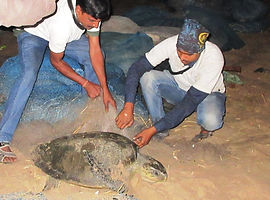
One of our important approaches to protect sea turtles is through protection, which involves the turtle guards and volunteers to monitor and protect nesting sites. Turtle guards are trained individuals who are responsible for patrolling the beach and ensuring that sea turtles are not disturbed during their nesting process. These turtle guards were appointed from local sea side villages.
Olive Ridley Sea turtle conservation initiative that has been led by local communities have demonstrated effectiveness through community engagement, awareness, habitat management, and conservation efforts. To ensure the long-term survival of this iconic species, we continue to adapt and innovate as new threats and climate change challenges arise and efforts made to adapt to changing environmental conditions and implement resilience strategies in association with other stakeholders.

Image Gallery


Video Gallery
