
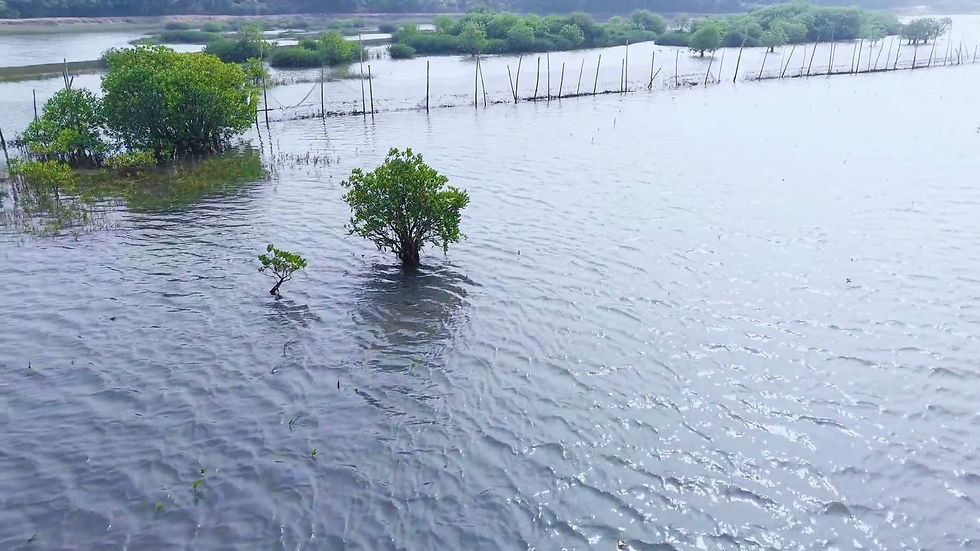
Bhitarakanika Project
Bhitarkanika ecosystem is a unique and internationally significance Ramsar site located in the estuarine area of the Brahmani and Baitarani rivers in Odisha, India. It is renowned for its mangrove forests, rich flora and fauna, and serves as a critical habitat for numerous species, including the saltwater crocodile and migratory birds. The ecosystem plays a vital role in maintaining ecological balance and supporting local livelihoods. This area is home to over 250,000 people in 410 villages and supports livelihoods through agriculture, animal husbandry, fishing, brackish water aquaculture, tourism and mangroves, which protect it from devastating cyclones and tidal surges. The buffer zone of Bhitarkanika faces significant threats from threats from human activities, including deforestation, exploitation of resources, unregulated aquaculture, unsustainable agriculture, pollution etc. These activities disrupt the delicate ecosystem, endangering the diverse flora and fauna. Additionally, pollution and climate change exacerbate the challenges, impacting the region's biodiversity and the livelihoods of local communities. In order for communities to be stable economically and well-off, these vital resources must be managed sustainably.

Green Recovery Project
The COVID-19 pandemic sweeping across the world was a crisis of many difficulties. The COVID-19 crisis had directly impacted the natural resources of Bhitarkanika Ramsar site. Green recovery project in Bhitarkanika was based on community-led restoration of wetland ecosystems such as mangroves and freshwater ponds. It helps develop capacities of the local communities by strengthening sustainable livelihoods (e.g., handicrafts, eco-tourism, vegetable and horticulture production). The above cited livelihood components are the most viable opportunities for communities to maintain sustainable employment without adversely affecting the Bhitarkanika wetland ecosystem.
Mangrove restoration
Direct employment has increased through local community engagement in mangrove restoration activities such as nursery raising, fencing work, land preparation, plantation activities, casualty replacement, monitoring and daily protection work in the new plantation site. 8 ha+ mangroves restored.


Communication Education Participation & Awareness (CEPA)
Despite its ecological significance of Bhitarkanika, there is a lack of awareness and education among the surrounding population, including women, students and teachers. In response to these issues, APOWA initiate, ‘Communication Education Participation & Awareness for Students, Teachers, and Women on Bhitarkanika’. Through this, we aimed at enhance knowledge and empower students, teachers, and women towards a sustainable future for the Bhitarkanika Ramsar site and its biodiversity.

Human-Crocodile coexistence
Bhitarkanika mangroves is a unique ecosystem located in Kendrapara district of Odisha. It is an internationally significance ecosystem renowned for it’s rich biodiversity and habitat for various species. However, Bhitarkanika also faces challenges, including increasing issues of human-crocodile conflicts. To address these issues, we have been working to resolution of human-crocodile conflicts through raise awareness and practical solutions among local people, students and teachers.

